
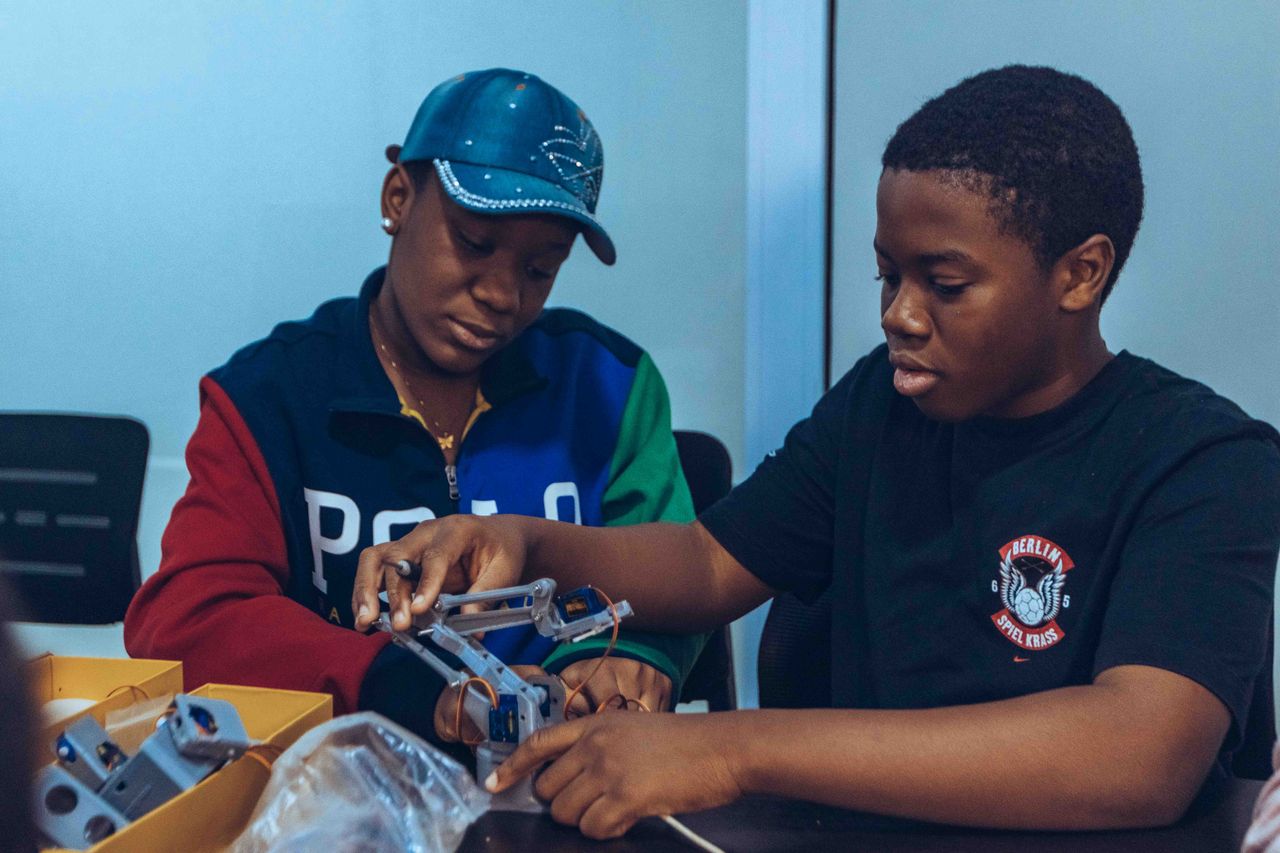
What if failure wasn’t something students were taught to avoid, but something they were intentionally taught how to navigate?
Much of education is structured around achievement: completing a prescribed curriculum, performing well on examinations, meeting learning outcomes, and ultimately producing evidence that students have acquired the expected knowledge and skills. Teachers are often working within fixed syllabi, assessment requirements, timelines, and institutional expectations.
While these structures serve important purposes, they can also leave limited room for experimentation. When students are constantly evaluated on whether they have arrived at the “right” answer, they may become reluctant to take risks, ask difficult questions, explore unfamiliar ideas, or try something that might not work. Over time, students can begin to associate mistakes with failure, and failure with inadequacy.
But failure is not the opposite of learning. Failure can be part of learning.
Experiencing failure in learning occurs when learners encounter a challenge that they cannot immediately solve. They are required to draw on prior knowledge, seek new information, test an idea, adapt their approach, receive feedback, and try again. These experiences can be uncomfortable. Students may experience frustration, disappointment, uncertainty, or self-doubt. But when these experiences occur within a supportive learning environment, they can also cultivate curiosity, persistence, problem-solving, and a willingness to continue learning.
Failure is an inevitable part of human learning and development. As society continues to change, individuals are increasingly required to learn new skills, navigate uncertainty, solve unfamiliar problems, and adapt to circumstances that do not have predetermined answers.
How can we intentionally integrate failure into education?
1. Redefining what failure means
One of the first conversations educators can have with students at the beginning of an academic year is: What does failure mean in this classroom? Failure does not have to mean that a student is incapable or unsuccessful. A wrong answer can reveal a misconception. An unsuccessful project can reveal an assumption that needs to be reconsidered. A poor decision can provide an opportunity to reflect and make a different decision next time.
Educators can normalize mistakes as part of the learning process and create environments where students feel safe to ask questions, experiment, and acknowledge what they do not yet know. The goal is not to celebrate failure for its own sake. The goal is to make learning from failure an expected part of the process.
2. Use case-based learning
Case-based learning provides students with opportunities to engage with real-world scenarios and complex problems in relatively low-risk environments. Instead of simply being given information and asked to reproduce it, students can work collaboratively to analyze a situation, identify problems, consider different perspectives, propose solutions, and defend their decisions.
There may not be one obvious answer. And that ambiguity is valuable. Students learn that problems in the real world are rarely structured like examination questions. They develop critical thinking, analytical, communication, and collaborative skills while learning to make decisions with incomplete information. Most importantly, they have the opportunity to test ideas without the consequences that might accompany those decisions in the real world.
3. Bringing community into the classroom
Learning does not have to be confined to the classroom. Educators can collaborate with entrepreneurs, community leaders, professionals, organizations, and other decision-makers to expose students to real-world challenges and experiences. This could include organization-specific case studies, fireside conversations, problem-solving sessions, or discussions about the journeys behind successful initiatives.
Importantly, these conversations should not focus only on success. Students can learn just as much from hearing about the decisions that did not work, the assumptions that proved wrong, the projects that had to be redesigned, and the lessons learned along the way. These stories help students understand that success is rarely linear.
4. Create low-stakes opportunities to fail
Students need opportunities to make mistakes without feeling that one mistake will define their academic performance. Low-stakes assessments, formative quizzes, drafts, prototypes, simulations, peer feedback, and reflective exercises can provide opportunities for students to test their understanding and receive feedback before their learning is formally evaluated.
This creates a win-win situation. Students can identify gaps in their understanding and make adjustments, while educators gain insight into where additional support may be needed.
5. Place less emphasis on evaluation and more on doing
Grades and examinations have their place in education. However, academic achievement should not be the only measure of students’ capabilities. Students also need opportunities to create, design, experiment, collaborate, solve problems, reflect, and apply what they have learned. Experiential learning provides opportunities for students to develop not only knowledge, but also practical skills, values, confidence, and the capacity to contribute meaningfully to their communities.
This requires a shift from asking: “Did the student get the right answer?” to also asking: “What did the student learn from the process?” “What did they try?” “What would they do differently?” “How did they respond when their first idea didn’t work?”
From failure to learning
Redefining failure does not mean lowering standards or creating environments where students are not held accountable. It means recognizing that meaningful learning often happens when students encounter something they cannot immediately solve. The question is whether our classrooms give them the opportunity to work through that uncertainty.
At iMagyned, we work with the understanding that education should prepare learners not only to know, but to think, create, experiment, adapt, and contribute. Failure is not necessarily a dead end. When intentionally designed into the learning process, it can become a stepping stone to deeper learning, stronger problem-solving skills, and greater confidence in navigating an uncertain world.
